
Having your business listed online may not guarantee wide visibility. Ranking in regional search results needs quality local backlinks from credible websites and community-focused platforms. If your business website remains buried in search results, quality backlinks for local seo can push your site higher and give you the authority boost needed to stand out in your region. This blog will provide you with a step-by-step guide on how to get local backlinks using proven strategies designed specifically for beginners.
Understanding Local Backlinks and Their Role in Search Rankings
When a business or website in your city links to yours, that’s a local backlink. Technically, they’re just hyperlinks transferring authority from one site to another. Google treats these links differently from generic backlinks. When a local website links to you, Google sees your business as reputable, active and worth featuring in regional results. This vote of confidence translates to greater visibility in local search algorithms, especially for region-specific organic results.
In 2026, local search algorithms are prioritizing genuine community connections over high domain authority. That means a credible link directing to a respected neighbourhood blog has more ranking potential than a link from an irrelevant high-traffic website.
1. Establish the Right Foundation Before Seeking Backlinks
Local Seo foundation is the pillar for pursuing quality local backlinks. Several prerequisites confirm the credibility of each link, delivering maximum benefit.
2. Optimize Your Google Business Profile Completely
Your Google Business Profile serves as the central hub of your local online presence. Complete it thoroughly:
- Enter your exact business name as it appears on your storefront or legal documents
- Select the most accurate primary category and add relevant secondary categories
- List your full, correct address (if you serve customers on-site)
- Provide your current phone number
- Source 10–15 local businesses relevant to your niche. Contact 5–10 dependable businesses to initiate local backlinks or explore co-marketing partnerships.
- Write a short, locally relevant summary (about 750 characters). Describe your business and who you serve.
A complete profile signals legitimacy to Google and makes a strong impression when potential customers click through from your backlinks.
3. Ensure NAP Consistency Across All Online Presence
NAP essentially is the abbreviation for name, address and phone number for your dedicated business. This information needs to be identical everywhere you aim to list your services. That calls for local directories, Google Business Profile, social media profiles and your website. Any inconsistency flags your site before Google algorithms. Even minute variations like “Suite 200” versus “Ste. 200” or “(555) 123-4567” versus “555-123-4567” can hurt your local reputation with search engines.
4. Prepare Pages Designed to Be Linked To
To make the most of outreach efforts, you need a strong, link-worthy content mapping strategy. Start by building pages like:
- An “About [City]” page explaining your roots in the community and why you’re invested there
- Service pages tailored to specific neighbourhoods or suburbs you serve
- A FAQ section addressing common local questions (permits, zoning regulations, seasonal considerations)
- Blog content exploring local topics relevant to your industry
These resources give potential linkers concrete pages to recommend to their audiences.
If you’re in a niche like healthcare, you may also benefit from reviewing industry-specific SEO frameworks, such as this Dental SEO Checklist that highlights foundational optimization steps healthcare professionals should follow.
5. Begin With High-Authority Local Business Listings
To earn local backlinks, the basic step includes directing through business directories and citation sites. These platforms are designed to connect businesses with customers while adhering to Google’s algorithms.
6. Find Relevant Local Directories
Search for opportunities like:
- General city guides (“best of [city]” websites, neighbourhood portals)
- Industry-specific directories with local filtering (home services, healthcare providers, legal professionals, fitness facilities)
- Professional associations and trade groups in your industry
- Chamber of Commerce and local business league websites
- University or hospital-affiliated directories, if applicable to your business
Earning quality local seo backlinks carries more weight than the quantity of links. You’ll get more SEO impact from one Chamber of Commerce link than 50 spammy directory links combined.
7. Execute the Listing Process Correctly
For each opportunity:
- Search for the directory and verify it’s legitimate by checking if it has actual traffic, regular updates and real business listings
- Create or claim your business profile using your exact NAP information
- Write a natural, concise business description that includes your location but avoids keyword stuffing
- Add your website URL and relevant category selections
- Upload a professional logo or photo if the platform allows
- Document where you’ve been listed in a simple spreadsheet for future reference
This foundational work takes time but establishes your baseline local backlink profile. Most legitimate businesses should have 20-40 quality directory listings.
8. Build Strategic Partnerships With Complementary Businesses
Genuine business relationships can be your credible source for quality local backlinks. This approach is often overlooked but is helpful if you collaborate with non-competing companies in your area.
Before you begin outreach, make sure your technical setup, content structure and website performance are aligned. Many businesses see better results when one team manages both their website and SEO, ensuring consistency across all foundational elements. You can learn more about why this unified approach matters in this guide:Why One Company Should Handle Your Website and SEO
Identify Your Local Business Ecosystem
Shortlist the business names and details. Those that serve similar target customers as yours, but in exchange for different services.
- For wedding photographers, florists, caterers, venues and musicians are perfect complementary partners to consider.
- A tax accountant works in synergy with a network of financial advisors, bookkeepers, payroll teams and business consultants.
- Physical therapists regularly build partnerships with fitness trainers, yoga practitioners and sports massage therapists.
9. Create Mutual Benefit Linking Structures
Several formats work well:
Partner Recommendation Pages: Create a “Trusted Partners in [City]” page on your site listing 5-10 complementary businesses with links. Ask each of them to do the same, featuring you. This creates natural, contextual backlinks that reflect real relationships.
Co-Created Content: Partner in writing content on blog topics like Wedding Planning Timeline for Toronto Couples. Highlight the insights from both the perspective of a photographer and the florist. When each business publishes and links back to others. That will generate meaningful results, leading to earning relevant local backlinks.
Neighbourhood or Industry Guides: Create a detailed guide on city-focused contractor resources on topics like how to hire contractors in Toronto. The insights should include contributions from partnering companies. When each partner links to the guide from their website, you will receive quality backlinks for local seo.
Service Referral Pages: If you frequently refer clients to certain businesses or they to you, create formal referral partnership pages with reciprocal links.
This approach of acquiring partnership-based backlinks yields credible results. That directly makes your site credible to search engines.
10. Contribute to Local Events and Neighbourhood Initiatives
Community involvement provides both brand building and backlink opportunities. Supporter recognition pages are commonly found on the websites of community organizations.
Identify Sponsorship Opportunities
Look for:
- Charitable gatherings led by nonprofits, including gala celebrations and local fundraising efforts
- Events coordinated by area nonprofits, including benefit dinners and community-focused efforts.
- Nonprofit-led galas and community efforts to raise funds
Maximize Sponsorship Value
When sponsoring:
- Explicitly ask whether sponsors receive website recognition or a link
- Provide a short description of your business and your preferred URL
- Offer to write a short sponsor description that the organization can use
- Request that your company name, logo and link appear prominently on their website
- If invited to attend or speak at the event, request a speaker bio page with a link
Sponsorship backlinks are directed through credible community-focused sites. This, the authenticity of these types of sources to Google’s local algorithms.
11. Create Original Local Content That Attracts Natural Links
The most sustainable backlink sources come from content so useful or interesting that other websites want to reference it.
Develop Linkable Local Resources:
Create guides that serve your community:
- Your Full [Neighbourhood] Resource for [Your Service]-Your Full Uptown Resource for Lawn & Landscape Care
- The Ultimate [Neighbourhood] Handbook for [Your Service] – The Essential Riverdale Guide to Home Renovation Services
- A Resident’s How-To Guide for [City]’s Updated Processes – How to Apply for a Renovation Permit in Ottawa Under the 2026 Regulations
Local bloggers, journalists and community websites naturally reference useful, original content when creating their own stories.
12. Conduct Local Research and Surveys
Original data attracts links:
- Survey residents about their preferences, challenges, or behaviours relevant to your industry
- Compile survey results into a visual report or infographic
- Share findings with local media, bloggers and industry contacts
- Watch for journalists and bloggers referencing your research
This approach generates backlinks from credible sources covering local trends and insights.
13. Write Hyper-Local How-To Content
Position yourself as a local expert:
- A landscaper: “Top Trees and Plants That Thrive in [City]’s Climate Zone.”
- An accountant: “2026 Tax Deductions Every [State] Resident Should Know”
- A home services provider: “What’s New in [City]’s 2026 Building Codes?”
This content naturally attracts links from local FAQ pages, neighbourhood guides and resource collections.
Identify Relevant Creators
Look for:
- Lifestyle and food bloggers covering your city
- Niche creators relevant to your field
- Local micro-creators who deliver stronger engagement than large influencer accounts
- Creators who also run blogs or personal websites
Develop Collaboration Ideas
Propose partnerships:
- Offer your products or services for review in exchange for honest coverage
- Invite creators to experience your business and feature it in their content
- Co-create content together that benefits both audiences
- Host a creator event or meetup at your location
- Feature their work on your platforms in exchange for coverage
Creator partnerships often result in natural, contextual backlinks and expose your business to engaged local audiences.
Map Your Network for Link Opportunities
Consider:
- With your existing network of vendors and operational partners, you can collaborate.
- Companies you have served consistently over the years
- The industry groups or associations you are part of
- Educational institutions you attended or support
- Community clubs, groups, or meetups you’re involved with
- Shared workspaces where you maintain an active membership
14. Research Competitor Backlinks and Unlinked Mentions
Strategic research uncovers additional opportunities.
Analyze Where Competitors Earn Links
Use research tools to identify:
- Which directories and listing sites do competitors appear on
- Which local organizations link to competitors
- Which media outlets have covered competitors
- Which bloggers or influencers have mentioned competitors
This research reveals opportunities you may have overlooked.
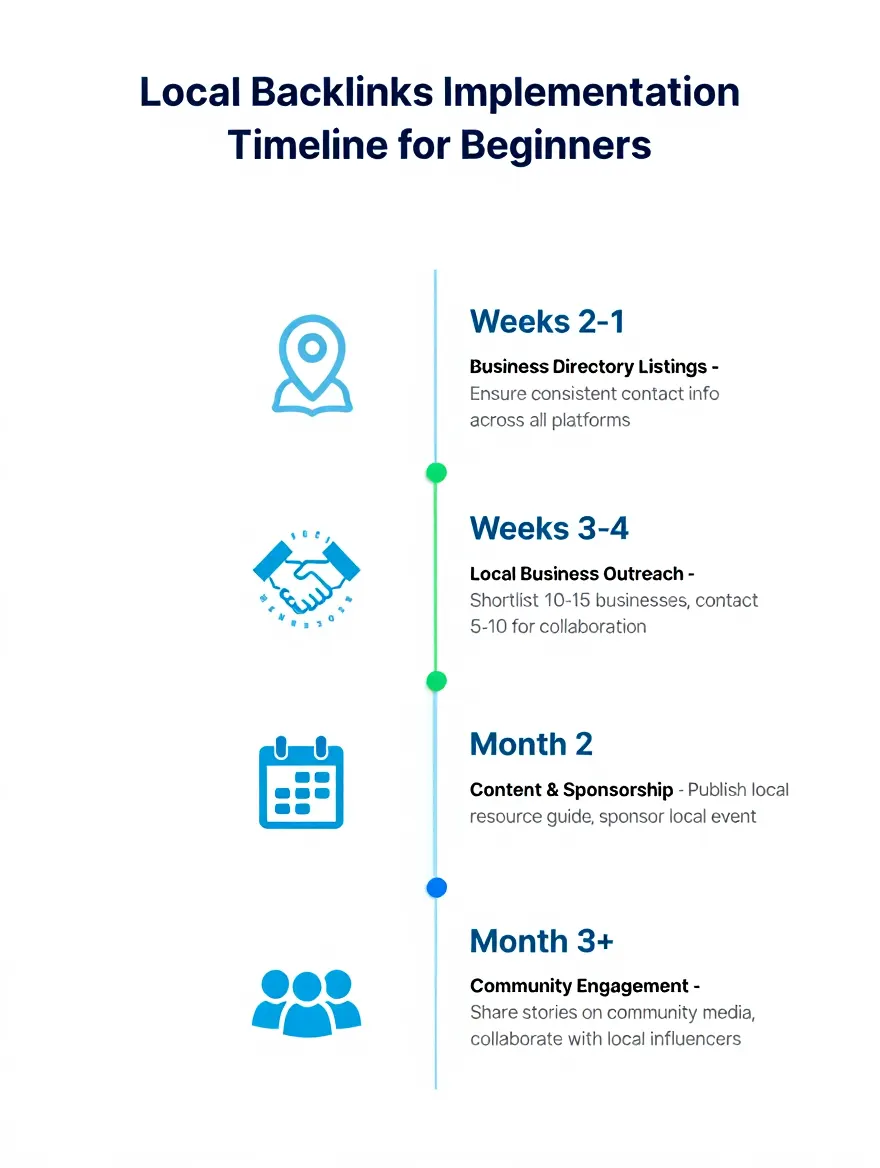
Implementation Timeline for Beginners
A realistic, manageable schedule for earning local backlinks:
#Weeks 1-2: Make sure your business is officially listed on all key local directories. Cross-check with the given contact information on all the sites and platforms. All of them should be identical.
#Weeks 3-4: Take time to shortlist 10-15 businesses in your region. Consider communicating with 5-10 businesses to encourage opportunities for collaboration.
#Month 2: Publish one valuable local resource or guide. Sponsor or support one local event or cause.
#Month 3 and beyond: Share your stories on community media. You can also collaborate with local influencers or creators to host educational sessions.
Boost Your Local Visibility with Toronto’s Trusted SEO Agency – CS Web Solutions
In the era where local trust is integral to online visibility, CS Web Solutions stands as your trusted ally in turning clicks into customers. Our experts are well-versed in merging technical precision with human understanding of your community. That enables delivering locally backed strategies to continue with the measurable growth.
Our SEO team has experience in working with initial foundations to scalable local backlink programs to help businesses build a consistent presence that resonates with both search engines and the target audience. This local-first approach has allowed our clients across Toronto and the GTA to achieve sustainable and measurable growth. Book a free strategy call at 905-890-2222!