
Google’s search experience has shifted dramatically. Over 50% of searches now conclude without a click. Quick-answer features and AI summaries are leading this transformation. A SparkToro study stated that Google only receives 360 clicks for every 1000 U.S. searches. Globally, the estimate is projected to 60% of all Google searches in 2024 that ended without even a single click. This seismic shift in Google search features is the outcome of a major change in search dynamics. This is why zero-click searches are becoming the reality of SEO in 2025.
Traditionally, users had to click through sites to get the information they were seeking. As Google surfaces zero-click results, instant answers to user intent are presented through featured summaries and snippets. Despite lower click-throughs, brands are still able to retain organic rankings. For marketers and business owners, the priority has changed from generating traffic to earning visibility. What’s happening right now is bigger than a trend. In the era of no-click searches, influence starts the moment your brand appears.
What Are Zero-Click Searches?
A zero-click search takes place when Google satisfies the query immediately through visible SERP features like featured snippets, knowledge panels, or AI-generated summaries. This removes the need to visit external pages.
When someone searches “how many ounces in a cup,” Google displays “8 ounces” right at the top. One glance and you’re done. There is no need to visit another site. This is what exemplifies Zero-click results.
Why Zero-Click Searches Are Increasing
Several powerful, overlapping forces are driving the steady rise of no-click searches:
- Rise of mobile search: Mobile users exceed 77% of zero-click rate. The rising use of smartphones offers the convenience of instant, online answers on a screen, preferable for direct answers in search results.
- Voice search growth: Voice assistants directly pull answers from featured snippets and knowledge panels. This feature delivers spoken responses with zero browser interaction.
- AI-driven summaries: Google’s AI overviews are appearing in over 13% of all U.S. desktop queries. These statistics validate the expansion of AI-generated summaries, aggregating answers from across the web ahead of organic search results.
- SERP feature expansion: With tools such as PAA sections, quick definitions and interactive calculators, Google has evolved the SERP into a self-contained information hub.
Types of Zero-Click Search Results
To master the efficiency of zero-click searches, it is essential to understand the different types of search results before brainstorming a winning strategy.
Featured Snippets
Often termed as position zero, featured snippets represent prime zero-click visibility in search results. These answers appear even before the organic search results. This feature pulls answers directly from credible sites and presents them to users. Effective Google featured snippet optimization focuses on three primary formats:
- Paragraph Snippets: This feature provides a 50-60 word definition answering the category of “what is” or “ why is” queries to improve chances of Google featured snippet optimization success.
- List Snippets: Ordered lists (for step-by-step instructions/recipes) or unordered lists (for feature summaries/best-of rankings).
- Table Snippets: Structured data extracted from HTML tables, often used for pricing, sizing charts, or comparison data.
Knowledge Panels
These panels usually appear on the right side of desktop results. In mobile devices, at the top of the mobile SERPs. The knowledge graph connects data points like company profiles, founders, reviews, social channels and industry categories, offering a list of entities, businesses, people, brands, or locations. Powered by Google’s knowledge graph, these panels provide a vast semantic database that maps real-world relationships between entities. US and Canadian Businesses value knowledge panels as a potential approach to reach the target audience.
AI Overviews (SGE / Generative Search)
AI overviews are dominating the search results across the US and Canadian markets in 2025 and 2026. The traditional approach involved clicking through links on webpages to seek answers. These overviews use generative AI to synthesize answers from credible sources. Generally appear in summary format before organic results, with source citations listed alongside. North American audiences are relying on AI overviews to satisfy intents and purposes against complex topics.
People Also Ask (PAA) Boxes
PAA boxes are accordion-style SERP features that cater to the display of relevant questions matching search intent around the same topic. When a user expands one, it delivers a brief answer in the format of a paragraph snippet. It also generates a fresh set of related questions. American and Canadian searches are heavily flooded with PAA for product research and financial planning queries, offering a high-value visibility opportunity for brands.
Local Pack Results
This feature is useful for location-based queries, like “web design agency near me”. Search results include a map and three prominent business profiles with reviews, hours and directions. US and Canadian service businesses highly benefit from these results. The better your Local Pack ranking, the easier it is for nearby customers to find and reach you directly. In a mobile-first search environment, that exposure is critical.
Definitions, Calculators & Instant Answers
Every day, informational searches, including exchange rates, weather forecasts and more, are now handled entirely within Google’s interface. With little opportunity left for clicks, these results reflect Google’s broader move toward an answer-first search experience.
Why Zero-Click Searches Matter for SEO
Declining organic CTR
The increasing drop in the organic click-through rate (CTR) is directly linked to the growth of click searches. The informational searches are getting readily satisfied by Google via SERPs. Data from US search results highlights an annual decline in the share of searchers clicking organic results. This indicates that even higher rankings do not guarantee traffic generation. Reports confirmed that zero-click searches are on the rise while the graph for organic trends is going down. For SEO teams, this means “rank #1” is no longer the only goal, but owning SERP features is.
Brand visibility vs website traffic
In a zero-click environment, SEO is measured in dual outcomes: visits and visibility. If your brand frequently appears in featured snippets, your search visibility will rise. However, the traffic may not reflect that visibility gain. This rise in visibility positions the brand as a credible source where users repeatedly see the name associated with trusted answers. It shifts the approach of optimization towards earning impressions rather than clicks.
Informational vs commercial queries
Zero-click searches are at the prime of informational queries(definitions, “how-to,” comparisons). With instant answers received through SERP, commercial and transactional queries are ending with immediate answers with fewer clicks than before. Yet they’re being pushed down by paid ads, product features, map listings and AI-generated answers.
From traffic SEO to visibility SEO
SEO strategy is evolving beyond traffic alone. By prioritizing visibility metrics like impression share, SERP dominance and brand demand, brands authority can be established at every critical touchpoint of the search journey.
Are Zero-Click Searches Bad for Businesses?
The answer relies on how efficiently your business responds to them. Zero-click searches are a structural shift that transcends passivity and rewards strategic adaptation.
The Downsides
One of the immediate drawbacks is reduced click-through rates. As Google is answering queries online directly, offering credible answers, the authoritative blog posts and optimized landing pages that once dominated organic visits are losing a significant portion of click potential. Businesses built on large-scale informational traffic are now seeing measurable revenue decline.
When a user gets to know your brand through credible answers over AI Overviews, then searches for you directly three days later and converts. Traditional analytics logged it as direct or branded, leaving the original zero-click exposure unaccounted for. Standard reporting models don’t align with today’s visibility-first search reality.
The Opportunities
The long-term upside is compelling for brands that prioritize strategic endurance over immediate returns.
Brand exposure at scale:
When your content reaches users as a trusted source, your brands gain repeated visibility without spending exclusively on paid ads. That kind of visibility builds familiarity fast.
Authority building:
Frequent appearances in top SERP features subtly position your brand as an expert voice. The ongoing visibility builds trust with users and strengthens your standing with Google.
Top-of-funnel awareness:
Zero-click visibility puts your brand in front of users, matching their current intent. By the time they start comparing solutions, your name isn’t new to them and that familiarity builds subtle trust.
Voice search dominance:
Smart speakers and voice assistants contribute to increasing visibility. By reading out the information out loud from featured snippets, it enables US and Canadian households to benefit from their search intent even without screen interaction.
How to Optimize for Zero-Click Searches
Building authority in a zero-click landscape requires ensuring structure, technical performance and brand presence to support search visibility.
- Optimize for Featured Snippets:Optimization begins at the framework level. Arrange content so Google can algorithmically isolate a direct response.
- Answer-first formatting:For question-intent queries, prioritize immediate resolution. Present a concise answer for featured snippet optimization. It will be shown upfront before introducing nuance or commentary.
- Definition-style paragraphs:For “what is” interrogative queries, provide a single-sentence definition right after the H2 or H3 heading. Avoid narrative buildup; Google isolates informational value, not contextual framing.
- Structured lists:Use proper <ol> tags for sequential steps and <ul> tags for unordered feature lists. Clean HTML list formatting, architect content blocks to increase list-snippet eligibility.
- Add schema markup:Pages prepared with structured data are likely to get highlighted in snippets and SERP feature inclusion. Research indicates that schema-enabled pages can receive as much as 2.5x more AI citations.
Target Question-Based Keywords
Zero-click-triggering queries follow consistent linguistic patterns that you can deliberately target. Build content around:
- “What is…” — Captures definitional queries that trigger paragraph snippets and knowledge panel integration.
- “How does…” / “How to…” — Drives list and HowTo snippets, heavily searched by US and Canadian audiences on mobile and voice
- “Why does…” — Surfaces explanatory content in AI Overviews and PAA boxes, especially for health, finance and tech verticals
SEO tools such as Semrush and Ahrefs highlight question-style searches in your niche. This increases the potential to earn snippet spots. When the SERP layout confirms the opportunity, it’s smart to focus there first.
Use Structured Data (Schema Markup)
Structured data markup is the technical pillar for Zero-click SEO. The right schema indicated the google on classifying and surfacing your content:
- FAQ schema: Directly contributes to People Also Ask boxes and online FAQ results. This is one of the highest-ROI schema types for informational content.
- HowTo schema: Structures step-by-step content for list snippets and voice search delivery. It is widely used by home services, tech and DIY brands in North America.
- Organization schema: Sends consistent brand signals to Google, reinforcing Knowledge Panel presence and AI Overview inclusion.
Build Topical Authority
Algorithms for Google’s AI Overviews and featured snippets prioritize topical authority. To earn visibility in AI Overviews and snippets, Google looks for strong subject expertise. A well-organized hub-and-spoke strategy is one of the smartest ways to prove it.
- Create a comprehensive pillar page on your core topic that covers the subject end-to-end.
- Develop supporting cluster articles on related subtopics. Each one links back to the pillar using descriptive, entity-focused anchor text.
- Maintain consistent internal linking across the cluster to signal semantic relationships between pages.
- Update content regularly. Freshness remains a measurable factor in AI citation eligibility heading into 2026.
Optimize for AI Search & Generative Results
SEO for AI search requires specific adaptations that go beyond traditional keyword optimization:
- Clear context and entity signals: Explicitly mention your brand name, location and core services consistently throughout your content. AI systems reference entities as answers in response to search intent.
- Entity-based SEO: Consistent brand mentions across your page help in anchoring your authority signals across SERP features, authoritative third-party directories and industry publications. This instills confidence in Google for identifying your brand as a trusted entity with higher chances of citing you in generative answers.
- Semantic optimization: Prepare the content covering a topic comprehensively. Make use of natural language and related concepts and avoid forcing exact-match keywords. AI models reward contextual depth and semantic completeness.
- EEAT signals: AI overviews prioritize Experience, Expertise, Authoritativeness and Trustworthiness to measure credibility. Inclusion of author bios with credentials, original data, cited sources, client case studies and real-world examples are empirical demonstrations of lived expertise.
Strengthen Brand Signals
For local and entity-based zero-click visibility, brand signals are the foundation on which everything else rests:
Consistent NAP: Maintain a consistent and uniform representation of brand names, address and phone number all over the site. These citations across directories contribute to credibility and conversion.
Knowledge Panel optimization: To get recommended, verify your business presence on Google. That can be done through regular updates on core brand details, descriptions and logos.
Google Business Profile: Timely updates are necessary. Respond to reviews and add fresh photos, keeping your hours accurate. Leveraging actions through GBP management can help dominate zero-click local search.
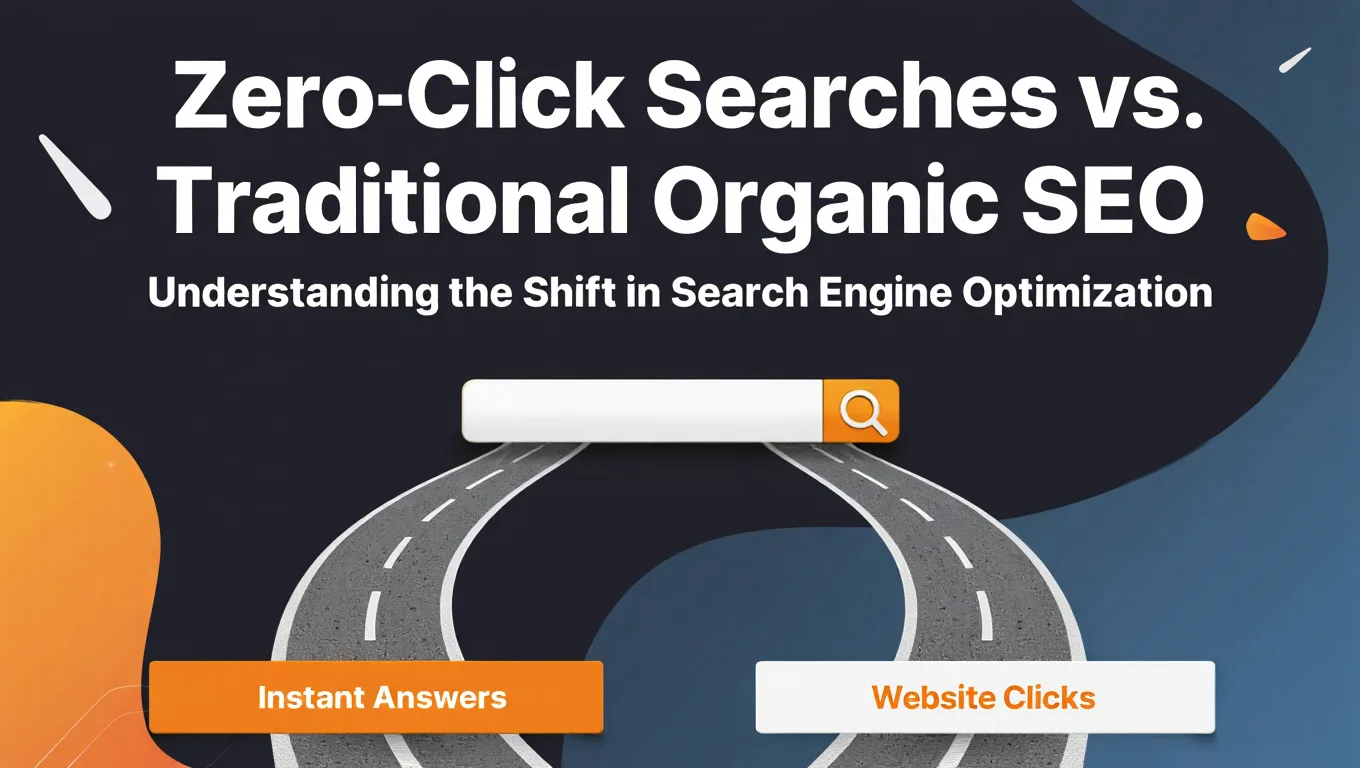
Zero-Click Searches vs. Traditional Organic SEO
With a noticeable shift in search behaviour, SEO splits into two distinct disciplines. The difference between traditional organic SEO and zero-click SEO can set the right expectations in 2026.
| SEO Approach | Traditional SEO | Zero-Click SEO |
| Primary Goal | Website traffic and sessions | SERP visibility and brand awareness |
| Success Metric | Click-through rate (CTR) and conversions | Impression share and brand search volume |
| Target Position | Top 3 “blue link” rankings | Position zero (SERP feature domination) |
| Content Format | Long-form, comprehensive articles | Direct-answer formatting and structured lists |
| Search Intent Focus | Commercial and transactional | Informational, quick-answer and local |
| Attribution Model | Direct click-to-conversion tracking | Assisted conversions and brand lift |
Traditional SEO
Traditional SEO prompts enhance your digital presence. It focuses on traffic generation and attracts users directly to your website that leads to conversion. It focuses on securing a blue link ranking in the standard organic results. The ranking is curved by long-form content that thoroughly addresses complex queries, building topical authority.
Zero-Click SEO
Zero-click searches focus on visibility. It dominates the SERP feature by staying at the top of organic results. Here, measurements of success are driven by impressions and optimizing brand exposure. It involves organizing content into structured, easily digestible sections that Google can pull directly into the SERP.
Why Both Strategies Must Coexist
The future of SEO requires mastering both approaches. Core ranking signals through traditional SEO enhance chances for getting featured in snippets and cited for AI overviews. Traditional practices help to build domain authority via trusted content. Zero-click searches format the content to get recognized by Google. Both need to co-exist as visibility without authority lacks credibility. And authority without zero-click optimization leaves you buried beneath the SERP.
Measuring Success in a Zero-Click World
When clicks decline, your analytics framework has to adapt. Winning zero-click searches means prioritizing search visibility metrics over raw session counts.
#1 Track Impressions in Google Search Console
A performance report can help to oversee Google Search Console impressions for queries with low CTR, yet high ranking. The AI model filter within GSC helps to isolate impressions, giving you clarity on zero-click reach.
#2 Monitor Featured Snippet Wins
Given that Google Search Console doesn’t label snippet placements, third-party SERP tracking tools are helpful to track keywords useful to hold in position zero.
#3 Brand Search Growth
The success of zero-click searches lies in rising volume for brand search. When users are frequently interacting with your brand via AI Overviews and snippets. They start preferring your brand, bypassing generic searches.
#4 Assisted Conversions
Use Google Analytics to evaluate performance beyond last-click attribution. Track multi-touch contributions to see how organic exposure supported the final transaction.
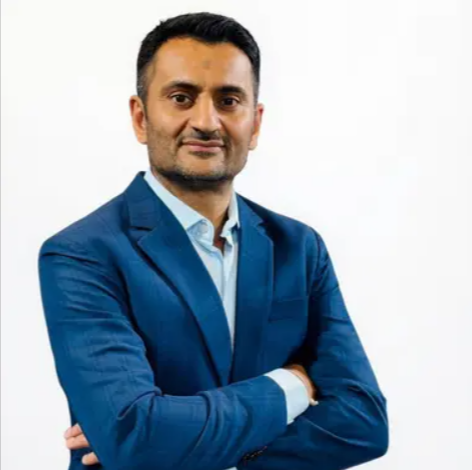
Vin Sonpal is based in Mississauga, Ontario, and is the founder of CS Web Solutions, established in 2015. He works across web, mobile, and digital platforms, helping businesses build online systems that are practical, scalable, and designed to support long-term growth.