A technically sound website with clean code and responsive design can still fail to attract organic traffic. The reason is often structural search engines were never given the signals they need to understand, index, and rank the content properly.
This is precisely where SEO intersects with web development. The decisions a developer makes around HTML structure, metadata, page speed, and URL architecture directly influence how search engines evaluate a site. Optimization is not a post-launch addition; it is embedded in the development process itself.
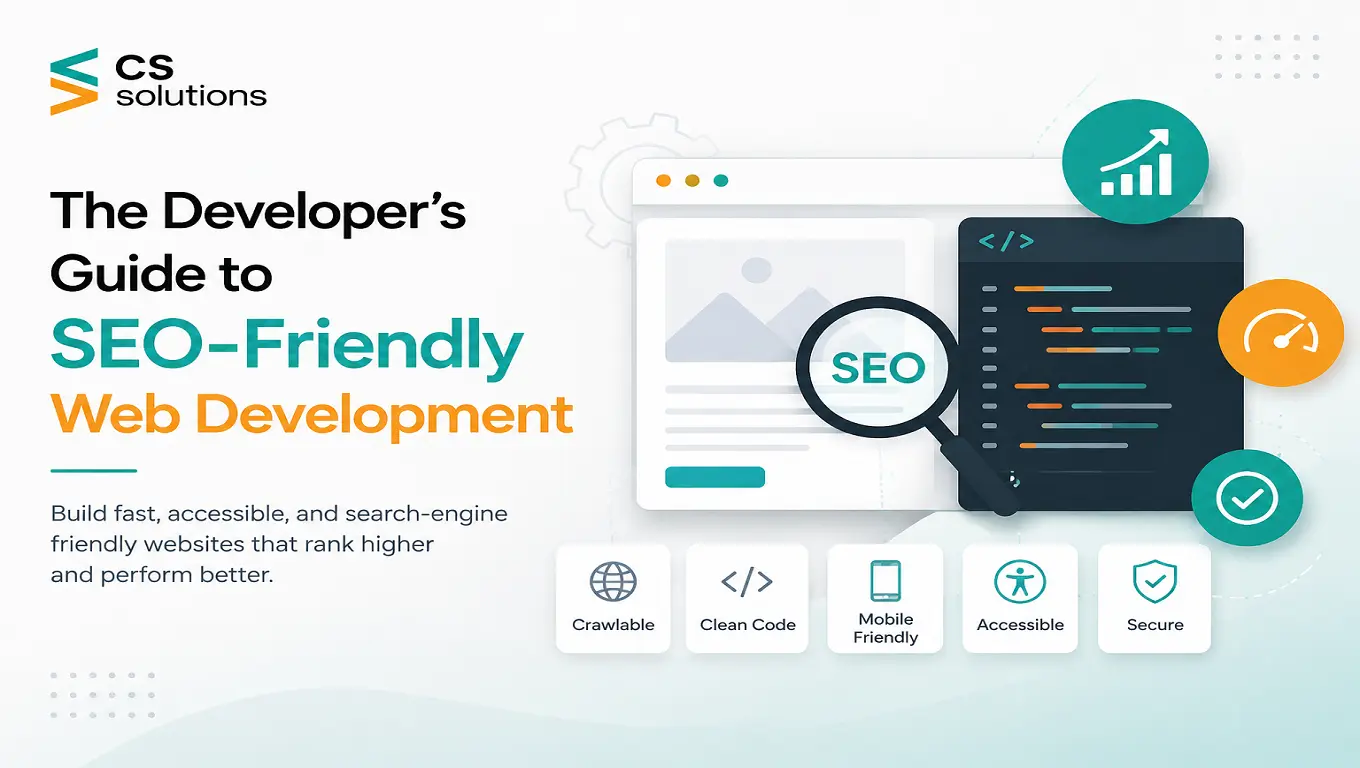
This guide covers the core SEO principles every developer should apply before taking a website live in 2026 from semantic markup and heading hierarchy to Core Web Vitals and structured data.
Why SEO Matters in Web Development
Google’s crawler is not admiring your gradients or your hover animations. It reads your source code the way a screen reader would, following your HTML, your headings, your links, and your load times, then sizing you up against everyone else chasing the same customer. Working with web development companies in Mississauga who build with that in mind means your structure earns rankings while you sleep.
The payoff is the part people underestimate. A page you optimize during the build keeps pulling in organic traffic for months, sometimes years, with no ad spend attached.
Types of SEO Every Developer Should Know
SEO splits into four lanes, and knowing where your hands matter most keeps you from spreading thin. A good seo agency Mississauga teams trust will cover all four, though one of them is squarely your job.
1. On-Page SEO
On-page is all the stuff that is on the page: headings, keywords, meta title, internal links, ALT text. This influences how cleanly one page communicates to Google what one page is.
2. Technical SEO
Technical SEO ensures that every corner of your site is accessible and readable by crawlers. From clean HTML and sitemaps to structured data, HTTPS, and Core Web Vitals – this is your bread and butter for the website.
3. Off-Page SEO
Off-page SEO builds your reputation through backlinks and mentions on other trusted sites. It lives beyond your code, yet a technically solid site collects those links with far less effort.
4. Local SEO
Local SEO puts you in front of nearby searchers typing “web developers near me.” For any business tied to a region, it pulls real weight.
Essential SEO Practices for Developers
Building a site that is easy for search engines to index is essentially feedback for crawlers to create a nice clean fast straight forward set of directions that the crawler can use and express how it did so with interoperability on first search.
1. Use Semantic HTML
Semantic HTML tells Google what each piece of content on your page does. Tags like <header>, <nav>, <main>, <article>, and <footer>literally name their role so your web crawler can easily differentiate what is the core of your message.
A pile of generic <div> tags leaves it guessing. Meaningful markup ends the guesswork and lifts accessibility in the same move, so screen readers and search bots both thank you for one decision.
2. Follow a Proper Heading Structure
Headings hand your page an outline. Use one <h1> for the topic, then nest <h2> and <h3> levels beneath it in order. Jumping levels or stacking two <h1> tags scrambles that map. A clean hierarchy helps Google follow your logic and lets readers skim without friction.
3. Write Unique Meta Titles and Descriptions
Your meta title and description are the handshake in the search results. They decide who clicks, even while they sit just outside the direct ranking math. Give each page its own title and a tight summary. Reusing the same lines across pages muddies things for crawlers and drags your click rate down.
4. Optimize Images with ALT Text
Every image wants ALT text that says what it shows. That serves screen readers and lets your visuals surface in Google Images as a bonus stream of traffic.
5. Build Mobile-Friendly Websites
The mobile version is the default for Google. You must look wonderful on every screen in town, from responsive layouts to readable type and thumb friendly menu.
6. Improve Core Web Vitals
Core Web Vitals measures loading, responsiveness and visual stability. Keep LCP, INP and CLS comfortably green: asset compression, JavaScript trimming & render-blockers elimination.
7. Use Clean and Descriptive URLs
A path like /services/web-development says far more than /page?id=482. Short, readable URLs are easier to share and rank better.
8. Create an XML Sitemap and robots.txt File
XML Sitemap, it helps us direct crawlers to the best URL. Robots.txt redirects them one one side with the right folders, and out the wrong side.
9. Use HTTPS, Canonical Tags, and Structured Data
HTTPS protect the site and help build trust with people. Canonical Tag – Sort out those painful duplicate-content challenges. Structured Data. Create the opportunity for rich results for FAQs, reviews, breadcrumbs, and much more.
Good vs. Poor SEO Practices
| SEO Element | Good Practice | Poor Practice |
| Headings | One H1, clean hierarchy | Multiple H1s, skipped levels |
| Images | Compressed with ALT text | Heavy files, no ALT |
| URLs | Short and descriptive | Long, random parameters |
| Content | Original and helpful | Duplicate or stuffed |
The rule underneath it all stays simple. Clarity and speed win, clutter and guesswork lose; a crawler rewards the site that makes its job easy, it buries the one making it work for its answers.
Conclusion
SEO is not a one-time deliverable it is an engineering discipline that begins at the architectural stage and continues to shape a site’s search performance long after launch. Developers who treat markup, speed, and structure as ranking inputs from day one build websites that generate organic traffic consistently, without dependence on paid campaigns.
Mastering every concept upfront is unnecessary. Applying the fundamentals covered in this guide and refining with each project will produce stronger, more compounding results than any last-minute optimization effort.
CS Web Solutions has been embedding this discipline into every project for over a decade, helping startups, growing businesses, and enterprise-level organizations turn well-structured development into lasting search visibility. The most effective time to optimize a website is while it is still being built.
To discuss your next project, call us at 905-890-2222 or email [email protected].
Frequently Asked Questions
Is SEO difficult for beginner web developers?
No. Semantic HTML, heading structure, and mobile responsiveness are simple to pick up and use from your very first site.
Do I need programming knowledge to learn SEO?
Not for the basics. Developers get a head start, since technical SEO gets written straight into the code.
What tools can developers use to test technical SEO?
Speed and indexing & crawl audits are covered by PageSpeed Insights, Lighthouse, Google Search Console, and Screaming Frog.
What is the most important SEO skill for web developers?
Clean semantic HTML. It combines accessibility, crawling, indexing and search performance all in one.
What should developers check before an SEO-friendly website goes live?
You need to check for unique meta tags, 1 H1 per page, alt text, HTTPS and a submitted sitemap in conjunction with core web vitals passed.
How can CS Web Solutions build an SEO-friendly website from the development stage?
We embed technical seo into the architecture from day zero, semantic markup, performance and structured data before launch.
Why should SEO and web development teams work together from the beginning?
Shared calls prevent expensive rebuilds. Aligning early bakes visibility into the foundation instead of bolting it on later.